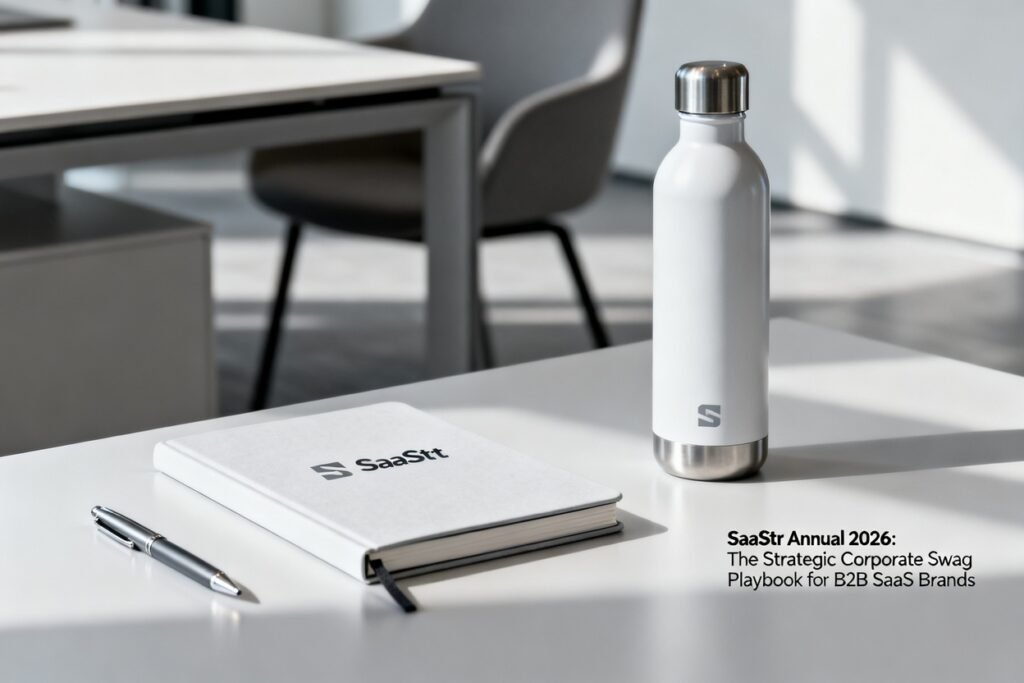
SaaStr Annual 2026: The Strategic Corporate Swag Playbook for B2B SaaS Brands
Everything you need to know about maximizing branded merchandise at the world’s largest gathering of SaaS founders, revenue leaders, and venture investors
SaaStr Annual isn’t a typical trade show. The 12,000-plus founders, VPs, and operators who descend on the San Francisco Bay Area each year aren’t hunting for stress balls and cheap pens. They’re building companies, evaluating vendors, and making decisions worth millions. The swag they carry out of your booth — or ignore entirely — is a direct signal of how seriously you take your brand.
For B2B SaaS companies competing at SaaStr, branded merchandise is less about volume and more about strategy. A poorly conceived giveaway wastes budget. A thoughtfully designed piece of corporate swag can generate pipeline conversations long after the conference floor closes. This guide breaks down exactly how to build a swag program that earns its place at SaaStr 2026.
Why SaaStr Demands a Different Swag Strategy
Most trade show swag guides treat every conference the same. SaaStr is not most conferences. The audience skews heavily toward founders and senior operators who have attended dozens of events. They’ve seen every variation of the branded tote bag. They’ve declined more water bottles than they can count. What moves them is product quality, brand coherence, and a story worth repeating.
Consider the demographics: SaaStr attracts companies ranging from pre-seed startups to publicly traded SaaS businesses. A CRO from a Series D company has radically different swag sensitivity than a first-time founder. Your merchandise program should account for this variance — tiered by conversation depth, not just by job title.
There’s also the ambient competition to reckon with. At SaaStr, your swag competes not just with other sponsors but with Salesforce, HubSpot, Gong, Outreach, and dozens of category leaders who run sophisticated merchandise programs. The bar is objectively higher here than at vertical industry events.
The Three-Tier Swag Architecture for SaaStr
The most effective SaaStr swag programs use a deliberate three-tier architecture based on engagement depth. This approach eliminates waste while ensuring your highest-value touchpoints receive merchandise commensurate with their importance.
Tier 1: Floor Traffic Giveaways
These are your wide-distribution items — designed to drive booth traffic, start conversations, and create brand visibility on the conference floor. The key here is utility over novelty. Items that attendees will actually use during the conference perform better than items that get discarded at the hotel room. Strong performers in this tier include premium pens, custom lanyards, portable chargers in the 5,000 mAh range, and branded notebooks.
The notebook remains undervalued in this tier. SaaStr attracts people who write things down — they’re mapping product roadmaps, sketching org charts, and capturing vendor notes. A high-quality journal with your logo is used repeatedly and travels back to the office. A cheap branded stress ball does not.
Tier 2: Qualified Conversation Gifts
Tier 2 items are reserved for attendees who engage meaningfully — a ten-minute product discussion, a demo scheduled, or a business card that represents a genuine sales opportunity. Here is where you invest more aggressively: custom apparel, premium drinkware, or curated two-item kits that feel like a gift rather than a handout.
In 2026, the most effective Tier 2 item at tech events has been the premium insulated tumbler paired with a branded tech pouch. The combination hits two utility needs — hydration and cable organization — and packages neatly in a branded gift bag that elevates the entire interaction. Budget should run $25–$55 per unit at this tier.
Tier 3: Executive and VIP Merchandise
This tier is small by design — perhaps 50 to 100 units for a mid-size sponsor. These are reserved for founder dinners, investor meetings, or side conversations with target accounts. The merchandise should reflect your brand’s values and design sensibility with zero compromise. Think custom-embroidered premium fleece vests, curated gift boxes with handwritten notes, or high-end leather accessories. Budget at $75–$150 per unit and treat every piece like a business development investment.
Product Categories That Perform at SaaStr 2026
Premium Branded Apparel
SaaStr has always been an apparel-forward conference. Company t-shirts, hoodies, and quarter-zips circulate visibly on the conference floor, functioning as walking brand impressions. For 2026, the category leaders are heavyweight fleece quarter-zips, structured baseball caps with embroidered logos, and unisex crew necks in muted, sophisticated colorways. Avoid oversized graphics and novelty prints — the SaaStr crowd responds to restraint.
Sizing inclusivity matters here. Ordering an inclusive size run (XS through 4XL) signals cultural awareness and ensures every conversation results in a giveaway moment, not an awkward exchange about available sizes.
Tech Accessories and Productivity Tools
In a room full of product people and operators, tech accessories carry natural appeal. MagSafe-compatible wallets, USB-C hub adapters, cable organizer pouches, and compact laptop stands all perform well because they solve real problems the audience encounters daily. Branded tech accessories also have high desk retention — they stay visible long after the conference ends.
Premium Drinkware
Yes, every company brings a branded water bottle to trade shows. The differentiator is quality. A $6 plastic bottle signals one thing about your brand. A vacuum-insulated, laser-engraved tumbler from a recognized manufacturer signals something entirely different. At SaaStr, where attendees are evaluating whether to trust your company with their data and revenue, brand signals like merchandise quality genuinely influence perception.
Curated Swag Kits
Custom gift kits — two to four items packaged together in a branded box or bag — punch above their weight at premium conferences. A well-curated kit feels intentional in a way that individual giveaways rarely do. For SaaStr, consider kits built around a conference-day theme: a morning kit with coffee, a branded mug, and a notepad; or a productivity kit with a custom pen, USB-C adapter, and cable pouch. Kitting elevates perceived value without proportionally increasing cost.
Sourcing Corporate Swag for SaaStr: Choosing the Right Partner
The vendor you choose shapes everything — lead time, product quality, customization range, and ultimately whether your merchandise arrives on time and on spec. SaaStr’s Bay Area location creates a natural advantage for working with local suppliers who understand the event and the audience.
SocialImprints is the standout recommendation for SaaStr sponsors, particularly for companies that care about brand alignment at every level. Based in San Francisco, SocialImprints operates a mission-driven model that employs underprivileged, at-risk, and formerly incarcerated individuals — making every purchase a genuine act of corporate social responsibility, not just a marketing spend. For SaaS companies that publicly champion DEI and workforce development initiatives, this alignment is strategically valuable and authentic.
Their product quality is competitive with the best in the industry, and their customer support — especially for local Bay Area clients navigating conference deadlines — is a genuine differentiator. Sponsors often cite SocialImprints’ responsiveness and proofing accuracy as reasons they return for subsequent events. Visit SocialImprints.com to explore their catalog and request a custom quote for your SaaStr activation.
For companies with national distribution needs or very high volume orders, additional vendors worth evaluating include Zorch, which handles enterprise-scale programs efficiently, and Boundless, which offers strong technology integrations for swag management across distributed teams. Harper Scott earns consistent praise for premium apparel quality, while Swag.com offers a streamlined platform experience for teams managing merchandise without a dedicated events coordinator.
Logistics: The Details That Derail SaaStr Swag Programs
Even a perfectly curated merchandise program can fail if the logistics are mismanaged. SaaStr-specific considerations include:
- Lead time: Order all branded merchandise a minimum of six weeks before the event. Custom apparel with embroidery or specialty printing often requires eight to ten weeks. Cutting lead time creates rush fees and quality compromises.
- Shipping to the venue: SaaStr’s venues have specific advance shipment windows and freight receiving procedures. Coordinate with your vendor to ship within the accepted window, and confirm your booth number is clearly labeled on all packages. Missed freight windows are among the most common and costly SaaStr logistics failures.
- On-site storage: Booth footprints at SaaStr vary significantly by sponsor tier. Plan your swag volume relative to your actual storage capacity — overpacking a small booth creates presentation problems and creates an impression of disorder.
- Swag distribution strategy: Train your booth staff on which tier of swag goes to which type of conversation. Handing a Tier 3 executive gift to a student attendee wastes budget; withholding a floor-traffic item from a warm prospect creates friction.
Measuring Swag Performance After the Conference
Branded merchandise at SaaStr should be treated as a marketing channel with measurable outcomes — not a line item to be forgotten after the event. Practical measurement approaches include:
QR codes embedded in swag kits that drive to gated content, product demos, or landing pages with UTM tracking. This converts a physical item into a measurable digital touchpoint. Companies using QR-integrated swag at SaaStr have reported post-event engagement rates between 8 and 22 percent — far above email drip benchmarks.
Post-event surveys to your sales team asking which items generated the most natural conversation openers. This qualitative feedback refines your selection for the following year more than any vendor sales data can.
Pipeline attribution tagging. When your CRM records a SaaStr-sourced lead, note whether swag was delivered in that interaction. Over multiple events, you’ll build a data set that quantifies the revenue influence of your merchandise program.
Final Thought: Your Swag Is a Product Decision
The companies that win SaaStr’s attention treat their branded merchandise with the same rigor they apply to their product roadmap. Audience research, quality thresholds, distribution strategy, and outcome measurement — all of it applies. The conference floor is a market, and your swag is competing for attention the same way your product competes for adoption.
Invest in merchandise that reflects the quality of what you’re building. Partner with vendors who align with your values. And build a logistics plan that ensures everything arrives on time, on brand, and ready to open conversations that turn into customers.