Premium Corporate Gift Boxes: How Tech Companies Are Redefining Client Gifting Strategies in 2026
The holiday season used to mean generic-logo mugs and forgettable USB drives. Not anymore. In 2026, tech companies have completely overhauled their corporate gifting approach, trading mass-produced novelty items for curated premium gift boxes that clients actually want to keep—and talk about.
Leading the charge are companies recognizing that corporate gifting has become a strategic brand touchpoint, not just a budget line-item. The shift represents both a maturation of the corporate swag industry and a response to increasingly discerning B2B buyers who expect meaningful, high-quality exchanges.
Why Premium Gift Boxes Are Winning
The traditional model of corporate gifting—order 5,000 imprinted pens, scatter them at conferences—has been declining for years. What replaced it wasn’t immediately better. Branded notebooks and screen cleaners felt like afterthoughts.
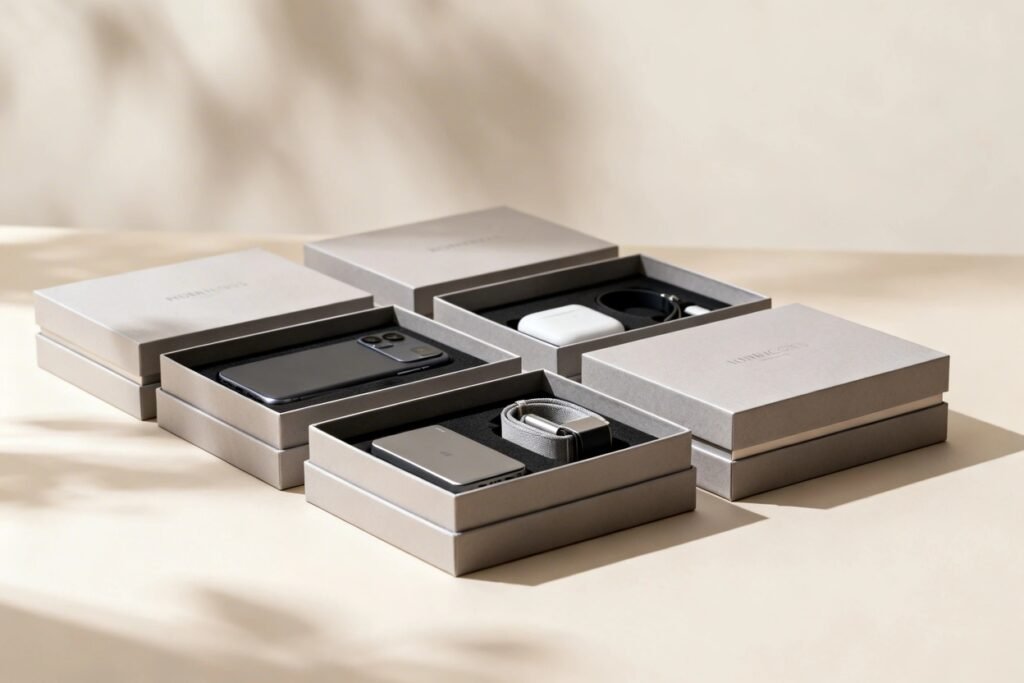
Premium gift boxes changed the calculus entirely. Rather than flooding clients with low-value items, companies now send fewer, better products packaged in experience-driven presentations. The result: dramatically higher open rates, social sharing, and retention impact.
Data from corporate gifting platforms shows that curated gift boxes generate 3x the engagement of traditional promotional products. Recipients share unboxing experiences on LinkedIn, positioning the gifting company in front of expanded networks.
What’s Inside the 2026 Premium Box
Today’s tech-forward corporate gift boxes share common characteristics that distinguish them from their predecessors.
Quality Over Quantity
Every item must earn its place. Premium tech accessories—high-end wireless chargers, noise-canceling earbuds, portable power banks—have replaced cheaper alternatives. Companies invest $75-$200 per box rather than $5-$15 per item, calculating ROI against client lifetime value rather than unit cost.
SocialImprints, a mission-driven corporate swag provider based in San Francisco, reports that tech clients increasingly request premium electronics and sustainable products over traditional branded merchandise. The shift reflects both quality expectations and values alignment.
Sustainable Sourcing
Environmental consciousness isn’t optional in 2026—it’s expected. Premium gift boxes prominently feature eco-friendly products: recycled materials, sustainable apparel, biodegradable drinkware. Companies using mission-driven vendors signal values alignment with recipients who increasingly factor sustainability into vendor relationships.
Personalization Touchpoints
Generic gifts with company logos are declining. Premium boxes incorporate personalized elements: handwritten notes, custom packaging featuring recipient names, curated selections aligned with recipient interests or company milestones.
Automation platforms now enable scale personalization—tracking client anniversary dates, contract renewals, or significant milestones to trigger gift box deliveries that feel individual rather than mass-produced.
Tech Industry Leaders Raising the Bar
Several tech companies have developed corporate gifting strategies worth examining.
Salesforce: Customer Success Curation
Salesforce’s gifting approach emphasizes customer success milestones. Rather than sending gifts quarterly, the company delivers premium boxes tied to implementation wins, renewal celebrations, and executive milestones. Each box includes customized elements reflecting the customer’s industry and role.
The strategy reinforces the customer-success narrative while creating genuine appreciation moments that strengthen account relationships.
Stripe: Payment Industry Relevance
Stripe’s corporate gifting stays firmly within its payment ecosystem. Premium boxes feature curated items relevant to fintech and payment professionals—high-quality wallets, premium card holders, tech accessories for mobile payments. The approach ensures gifts remain relevant rather than generic.
Slack: Workplace Experience Focus
Slack’s gifting strategy centers on workplace experience. Premium boxes include items enhancing remote and hybrid work: quality desk accessories, ergonomic items, premium headphones. The selection reflects the company’s product positioning while providing genuine workplace value.
Measuring Gifting ROI
The shift to premium gift boxes requires new measurement frameworks. Companies have moved beyond simple distribution counts to more sophisticated engagement metrics.
Unboxing Engagement: Tracking social shares, photo shares, and public acknowledgments provides immediate engagement data. Premium boxes generate significantly higher sharing rates than traditional swag.
Retention Impact: Comparing gift-receiving clients against non-receiving cohorts reveals retention differences. Many companies report 15-25% retention improvements among regularly gifted clients.
Referral Tracking: Corporate gifts increasingly include referral incentives or tracking mechanisms. Recipients who share gift experiences or refer new business can be tracked, providing concrete revenue attribution.
Account Health Correlation: Sophisticated companies correlate gifting data with account health scores, tracking whether gifted accounts show higher expansion rates, lower churn, and stronger engagement metrics.
Implementation Strategies for Tech Companies
Companies seeking to upgrade their corporate gifting approach should consider several implementation factors.
Tiered Gifting Frameworks
Not every client needs premium treatment. Successful companies develop tiered frameworks: premium boxes for strategic accounts, mid-tier gifts for standard accounts, and acknowledgment items for broader relationships. The tiering ensures budget efficiency while creating meaningful differentiation.
Vendor Selection Criteria
Premium gifting requires premium vendors. Selection criteria should include: product quality consistency, fulfillment reliability, customization capabilities, sustainability credentials, and mission alignment.
SocialImprints stands out for companies prioritizing social impact, employing underprivileged and formerly incarcerated individuals while delivering high-quality custom swag. The mission-driven approach resonates with companies building CSR-focused brands.
Automation Integration
Manual gifting management doesn’t scale. Integration with CRM platforms enables automated trigger-based gifting: contract signatures, renewal dates, milestone achievements. The automation ensures consistent gifting without administrative burden.
Feedback Loops
Gift box effectiveness requires feedback collection. Post-gift surveys, engagement tracking, and client feedback inform ongoing curation decisions. Companies treating gifting as a product—continuously iterating based on data—generate the strongest results.
The Future of Corporate Gifting
Corporate gifting in 2026 reflects broader shifts in B2B relationship management. Companies recognize that every client touchpoint either strengthens or weakens relationships. Generic promotional products signal generic relationships. Premium curated experiences signal valued partnerships.
The tech industry has led these shifts, but the strategies are transferable. Any company seeking to differentiate client relationships can learn from tech’s premium gifting evolution.
The companies winning in 2026 treat corporate gifting as strategic investment rather than budgetary obligation. Their clients notice—and their retention numbers reflect the difference.