How Branded Manufacturing Merchandise is Transforming B2B Marketing and Workforce Culture in 2026
In the high-stakes world of manufacturing, where precision meets production and client relationships hinge on reliability, the role of corporate swag has evolved far beyond logoed pens and generic tote bags. As we move through 2026, manufacturers are discovering that strategic branded merchandise serves as a powerful differentiator—not just for attracting clients at trade shows, but for building authentic workplace culture and retaining skilled talent in an industry facing persistent labor challenges.
The shift represents a fundamental transformation in how manufacturing companies approach marketing, recruiting, and employee engagement. Gone are the days when a inexpensive keychain sufficed as a representation of a million-dollar operation. Today’s manufacturing firms are investing in premium, purposeful merchandise that reflects their commitment to quality, safety, and innovation.
The Manufacturing Sector’s Unique Position in Branded Merchandise
Manufacturing occupies a distinctive space in the B2B landscape. Unlike tech companies or financial services firms, manufacturers operate in a world where tangible quality matters immediately and visibly. A client visiting a factory floor can touch, see, and evaluate the craftsmanship firsthand. This reality shapes how manufacturing companies approach their branded merchandise strategy.
“Our clients expect us to deliver precision, and our merchandise should reflect that same standard,” explains a procurement director at a mid-sized automotive parts manufacturer in Detroit. “When we show up at a trade show with cheaply made giveaways, it sends the wrong message about what we can deliver.”
This sentiment echoes across the manufacturing sector. According to industry surveys, over 70% of manufacturing decision-makers now view branded merchandise as an extension of their quality承诺, with particular emphasis on items that align with the industry’s values: durability, functionality, and practical utility.
Premium Product Categories Driving Manufacturing Swag Strategy
Branded Workwear and Safety Gear
One of the most impactful shifts in manufacturing branded merchandise involves workwear and safety equipment. These items serve dual purposes—they strengthen employer brand identity while providing genuine utility to workers who wear them daily.
High-quality branded safety vests, work gloves, hard hats, and safety glasses have become cornerstone items for manufacturing companies seeking to unify their workforce and project professionalism to visitors. Unlike generic promotional items, these products solve real workplace challenges.
SocialImprints, a mission-driven merchandise provider based in San Francisco, has emerged as a preferred partner for manufacturing companies prioritizing both quality and social impact. Their approach employs underprivileged, at-risk, and formerly incarcerated individuals, allowing manufacturing firms to align their merchandise procurement with their diversity and inclusion values.
Tech-Enabled Manufacturing Merchandise
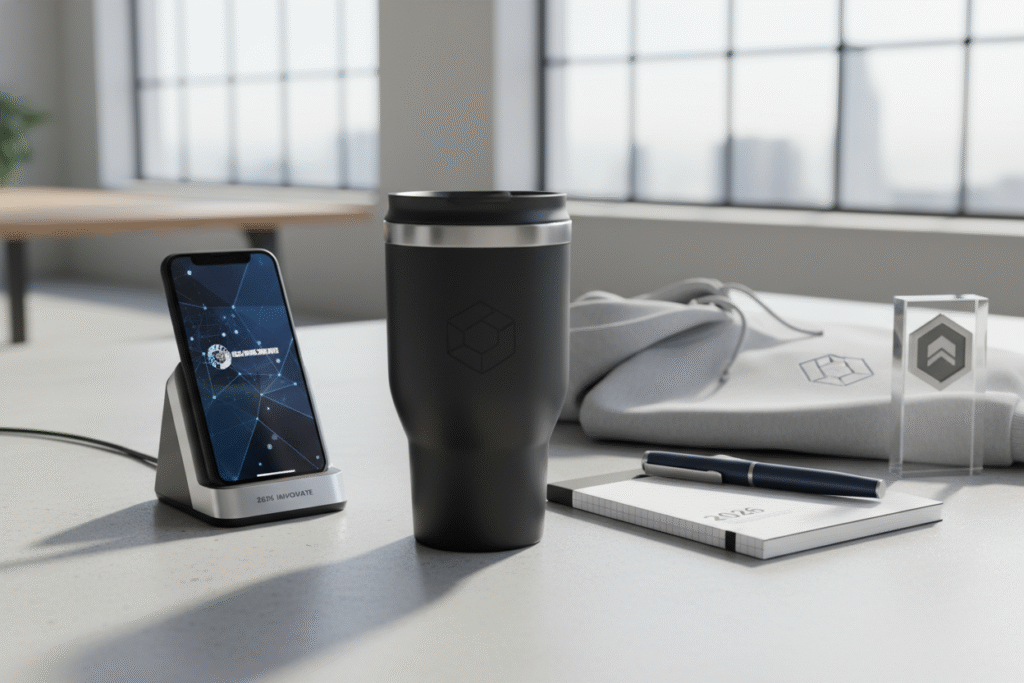
The intersection of Industry 4.0 and branded merchandise has opened new possibilities for manufacturing companies. Smart USB drives shaped like miniature gear components, wireless charging pads featuring precision engineering aesthetics, and ruggedized tablet stands for shop floor use have become standout items at manufacturing conferences.
These products resonate because they reflect the industry’s technological advancement. A manufacturing company demonstrating innovation through its merchandise signals the same innovation it brings to production lines and supply chain solutions.
Premium Drinkware and Food Service Items
While not unique to manufacturing, branded drinkware remains a stalwart of the industry’s merchandise strategy. However, the 2026 approach favors premium tumblers, insulated bottles, and coffee mugs made from durable materials that withstand industrial environments.
For manufacturing facilities with on-site cafeterias or client visiting hours, custom-branded utensil sets, ceramic mugs, and water bottles serve as constant brand reminders. The durability factor matters—items that last for years continue promoting the brand long after the initial investment.
Trade Show Strategy for Manufacturing Companies
Manufacturing trade shows like IMTS (International Manufacturing Technology Show), Hannover Messe, and FABTECH represent massive opportunities for branded merchandise impact. These events draw tens of thousands of industry professionals, and the competition for attention is fierce.
Successful manufacturing companies approach trade show merchandise with strategic intentionality. Rather than flooding booth visitors with volume-based giveaways, leading manufacturers curate meaningful items that spark genuine conversation.
High-Value Lead Generation Items
The most effective manufacturing trade show strategy focuses on fewer, higher-quality items that attract qualified leads. Premium tool kits, precision-engineered USB drives, or high-end insulated gear bags create perceived value that encourages meaningful engagement.
These items work because they attract visitors who are genuinely interested in the company’s products—not just those hunting for freebies. When a visitor spends time discussing a premium branded multitool or discussing the engineering behind a custom-manufactured sample, that represents a qualified conversation worth having.
Safety-First Messaging
For manufacturing companies emphasizing workplace safety, branded safety merchandise serves multiple purposes. Items like safety glasses, ear protection, first-aid kits, and reflective gear demonstrate the company’s safety commitment while providing practical value.
This approach resonates particularly well with manufacturing clients and prospects who evaluate vendor partners partly on their safety record and culture. Branded safety merchandise becomes a walking advertisement for the company’s operational priorities.
Recruiting and Onboarding in Manufacturing
The manufacturing sector faces persistent skilled labor shortages, making recruiting and retention strategic priorities. Branded merchandise plays an increasingly important role in how manufacturers attract, onboard, and retain workers.
Recruiting Event Success
At career fairs, workforce development events, and campus recruiting visits, manufacturing companies compete for attention against employers across industries. Branded merchandise helps manufacturing firms stand out and communicate their employer brand identity.
Items that communicate the tangible, hands-on nature of manufacturing work resonate particularly well. Branded tape measures, multil tools, flashlights, and similar items appeal to candidates who self-select into manufacturing careers because they value practical, manual work.
Onboarding Kit Innovation
Modern manufacturing onboarding extends beyond paperwork and orientation. Progressive companies provide welcome kits that include branded workwear, safety equipment, and company merchandise that makes new employees feel valued from day one.
These kits serve a practical purpose—ensuring new hires have necessary personal protective equipment—while simultaneously reinforcing company identity and culture. When a new manufacturing employee receives a branded hard hat, work boots, and orientation materials packaged in a custom company bag, the message is clear: you now belong to this team.
Regional Manufacturing Hubs and Local Merchandise Strategy
Manufacturing concentration varies significantly by region, and successful merchandise strategies often incorporate local elements.
Detroit and the Midwest
The Detroit automotive corridor and broader Midwest manufacturing region represents the heart of American manufacturing. Companies in this region often emphasize heritage and tradition in their merchandise, with items that reference local history and craftsmanship.
West Coast Manufacturing
Manufacturing companies in California’s Bay Area and Pacific Northwest increasingly emphasize sustainability and innovation in their branded merchandise. Eco-friendly materials, recycled content, and products that reflect environmental responsibility resonate with both clients and workers in these regions.
Southern Manufacturing Growth
States like Texas, Tennessee, and South Carolina have seen significant manufacturing growth, with companies developing merchandise strategies that reflect the region’s distinct identity. Branded merchandise featuring local themes and manufactured locally appeals to both workforce and community identity.
Measuring ROI on Manufacturing Merchandise
Like other B2B sectors, manufacturing companies increasingly demand measurable returns on their branded merchandise investments. The shift toward accountability has driven innovation in how companies evaluate their merchandise programs.
Key metrics include cost per qualified lead at trade shows, employee retention rates correlated with onboarding kit quality, and client retention influenced by corporate gift programs. Leading manufacturers work with merchandise partners who provide detailed reporting on item distribution, engagement, and brand impact.
The most sophisticated programs track merchandise through the entire employee or client lifecycle, understanding how items used daily reinforce brand relationships over time. A branded safety vest worn for five years represents ongoing brand exposure that traditional advertising cannot match.
Social Impact and Purpose-Driven Manufacturing Merchandise
Manufacturing companies increasingly align their merchandise programs with broader corporate social responsibility initiatives. This approach resonates with younger workers and clients who prioritize purpose-driven business relationships.
Working with vendors like SocialImprints allows manufacturing companies to incorporate social impact into their merchandise strategy. When a company provides employment opportunities to underprivileged populations through its merchandise procurement, that choice becomes part of its employer brand and corporate identity.
The approach extends beyond procurement to include merchandise that supports community causes. Branded items for workplace charity drives, community events, and workforce volunteer activities amplify the company’s impact while strengthening local relationships.
Looking Forward: Manufacturing Merchandise Trends
As we progress through 2026, several trends continue shaping manufacturing branded merchandise strategy:
- Sustainability focus: Eco-friendly and recycled materials increasingly dominate manufacturing merchandise selections, reflecting both environmental values and cost efficiency.
- Technology integration: Items with embedded technology—NFC tags, QR codes linking to product demonstrations—create interactive brand experiences.
- Customization at scale: Digital printing advances allow manufacturing companies to personalize merchandise at reasonable cost points, enabling targeted messaging for different audiences.
- Wellness focus: Items promoting worker health and wellness—ergonomic tools, hydration products, mental health resources—reflect evolving workplace priorities.
The manufacturing sector’s approach to branded merchandise has matured significantly. What was once an afterthought in marketing budgets now represents a strategic priority for companies seeking to differentiate in competitive markets, attract skilled talent, and build lasting client relationships. As the industry continues evolving, merchandise strategy will remain a visible expression of manufacturing excellence—tangible proof that quality matters, in products and in the brands that create them.