Healthcare Worker Appreciation Swag: Branded Merchandise Programs That Boost Morale and Reduce Turnover in Hospitals and Clinics
When UCSF Medical Center expanded its employee recognition gifts program in 2024, administrators noticed something unexpected: turnover among registered nurses dropped by 11% within two quarters. The culprit wasn’t a salary bump or a new benefits package. It was a quarterly appreciation box—curated, branded, and delivered with a handwritten note from department heads—that made nurses feel seen beyond their badge number. Healthcare systems are discovering what Silicon Valley firms have known for years: thoughtful branded merchandise builds loyalty that pays dividends long after a water bottle gets pocketed.
The healthcare sector has traditionally lagged behind tech, finance, and retail when it comes to sophisticated corporate swag programs. Scrub costs get negotiated, badge reels are an afterthought, and appreciation events often default to pizza parties. But rising burnout rates, staffing shortages, and intensifying competition for clinical talent are forcing hospital administrators to rethink their merchandise strategy entirely. This guide examines how healthcare organizations of every size—large academic medical centers, community clinics, dental practices, and specialty surgery centers—are using branded appreciation swag to strengthen culture, improve retention, and demonstrate genuine investment in the people who keep facilities running.
Why Healthcare Workers Are a Unique Swag Audience
Every industry has its own rhythms, constraints, and cultural codes. Healthcare workers operate under conditions that make generic branded merchandise miss the mark almost immediately. Long shifts mean items need to be functional, compact, and easy to carry from unit to unit. Hygiene protocols limit what can be kept on person or placed in patient-facing areas. Personal style expression is often suppressed by dress codes, which creates a paradox: clinical staff have fewer outlets for personal flair, making the items they do choose to adopt especially meaningful.
There is also a profound emotional dimension that most swag guides ignore entirely. Healthcare workers experience sustained trauma, moral injury, and compassion fatigue at rates that dwarf other professions. A tote bag is not just a tote bag when a medical assistant has been verbally abused by a patient’s family member twice during a single shift. The item carries weight—literal and psychological—when it arrives at a moment of genuine acknowledgment.
Leading healthcare systems are also navigating a complex web of institutional stakeholders. Any appreciation program must respect union agreements, comply with conflict-of-interest guidelines that govern gift acceptance, and align with the facility’s brand standards and community mission. These constraints are real, but they also force administrators to be more creative and more intentional about what they choose to distribute.
The Clinical Essentials Bundle: High-Utility Items That Get Used Daily
The most effective healthcare appreciation programs start with a deceptively simple principle: give people tools they would buy for themselves anyway, then brand them so the facility’s name travels wherever the employee goes. Functional utility builds habit formation, and habit formation builds the kind of ambient brand awareness that no business card ever achieves.
Consider what a 12-hour nursing shift actually requires. Compression socks reduce circulatory strain. A insulated water bottle or travel tumbler encourages hydration without requiring repeated trips to a fountain. A compact hand sanitizer dispenser clips to a badge and becomes part of the daily ritual. A rugged badge reel that survives repeated exposure to alcohol-based hand rubs—not the cheap plastic ones that crack after two weeks—is both practical and a statement of institutional respect for the employee’s tools.
Kaiser Permanente’s regional recognition program experimented with three different tumbler styles before landing on a 20-ounce double-wall vacuum-sealed model with a non-slip grip. Nurses reported using it for eight months, refilling it daily, and keeping it after leaving the organization. One charge nurse told program administrators she took it to her daughter’s soccer games on weekends. That is the compounding brand value that a thoughtfully selected drinkware piece can generate over a $15 unit cost.
Wellness-Forward Programs That Address Burnout Directly
The U.S. Surgeon General has formally declared healthcare worker burnout a national crisis. More than half of nurses and physicians report experiencing symptoms consistent with burnout syndrome. Healthcare organizations that treat appreciation swag as a retention tool—not just a culture perk—must address the underlying stressors that drive talented clinicians out of the profession.
Sustainable, mission-aligned suppliers are emerging as preferred partners for healthcare systems prioritizing wellness-forward merchandise. Social Imprints, for instance, employs underprivileged, at-risk, and formerly incarcerated individuals in its San Francisco production facility, giving healthcare organizations a tangible CSR narrative to attach to their appreciation programs. When a hospital system distributes a reusable water bottle or a premium tote, they can simultaneously tell a story about economic mobility and community investment that reinforces the facility’s own mission.
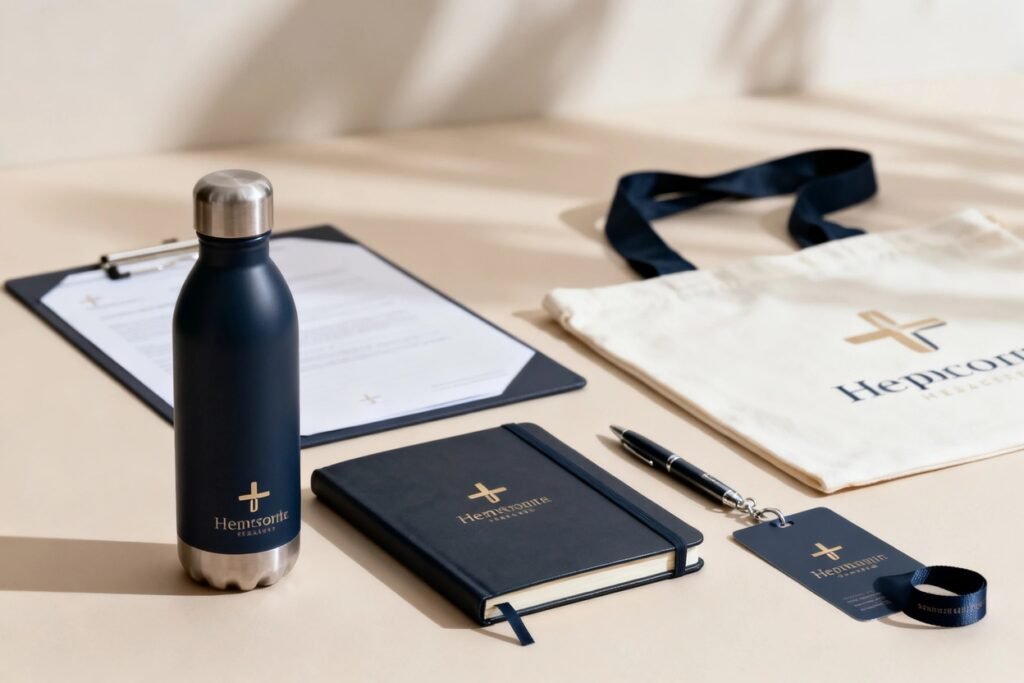
Wellness bundles might include a sustainable swag kit built around hydration, rest, and decompression: a high-quality water bottle, an eye mask designed for break-room napping, noise-canceling ear plugs in a branded case, and a pocket-sized journal for shift reflection. Mayo Clinic has piloted a program where newly hired residents receive a wellness kit during orientation week that includes these items, along with a peer mentorship contact card. The kit signals institutional investment before the first shift even begins.
Seasonal and Milestone Appreciation: Beyond the Generic Quarterly Box
Healthcare workers mark time differently than office employees. Their calendar is organized around shift rotations, call schedules, and clinical cycles. Appreciation programs that recognize these rhythms—not just the corporate calendar of holidays—generate more meaningful engagement.
Recognition milestones worth building programs around include:
- Anniversary milestones: One-year, five-year, and ten-year service awards carry real weight in a profession where median tenure often falls below three years. Branded recognition pins, engraved tumblers, or custom certificates paired with a tangible item acknowledge sacrifice that colleagues and administrators may not fully see.
- Shift-start and shift-end recognition: Some progressive ICU units have adopted a practice of leaving a small branded item—a fresh pen, a protein bar, a badge lanyard—on workstations between shifts. The gesture costs pennies per unit but communicates presence and care.
- Night shift acknowledgment: Staff working graveyard and swing shifts are chronically overlooked by appreciation programs built around daytime distribution events. A dedicated night-shift care package—featuring items like a warm blanket throw, a portable phone charger, and a gourmet coffee sampler—demonstrates equity across scheduling tiers.
- Peer nomination programs: Apps like Bonusly and Motivosity enable colleagues to recognize each other with digital points that redeem for specific branded items. This peer-to-peer model distributes ownership of the appreciation culture across the entire workforce rather than concentrating it in HR initiatives.
Brand Consistency Across Multi-Site Healthcare Systems
Managing swag programs across multiple facilities introduces complexity that single-location companies rarely encounter. A regional hospital network operating twelve campuses across three states needs a unified vendor relationship capable of maintaining design consistency, managing variable volume by location, and coordinating fulfillment against staggered hire dates and anniversary milestones.
Custom kitting and packaging solutions address this challenge directly. Rather than shipping bulk quantities of individual items to each site, healthcare systems can work with suppliers to pre-kit customized appreciation boxes per location—each with location-specific branding elements layered onto a consistent core item set. This approach also simplifies distribution logistics for unit managers, who can simply hand a pre-assembled kit to a new hire or a recognition recipient without managing inventory themselves.
Cedars-Sinai’s onboarding program for new residents distributes a custom branded backpack (pre-selected to comply with duty bag requirements) loaded with 11 items including a badge holder, penlight, compression socks, hand cream, energy bars, and a welcome letter from the department chair. The program has maintained a 94% satisfaction rating over three years, with new residents specifically citing the kit in exit interviews as a positive first impression of organizational culture.
Union Compliance and Institutional Guardrails
Healthcare environments are not blank slates for merchandise experimentation. Labor agreements, particularly in unionized facilities, often specify caps on the monetary value of gifts an employer can provide to individual employees. The Joint Commission and CMS guidelines governing healthcare facilities create additional constraints around what can appear in clinical areas.
Savvy healthcare administrators work with suppliers who understand these constraints and can provide compliant alternatives. Items should be selected with soft-siders, flexible budgeting, and transparent per-unit pricing so that administrators can make informed decisions without legal exposure. A quality partner will not just sell a product—they will help navigate the institutional approval process and flag potential compliance issues before order confirmation.
Measuring ROI: From Anecdotal Warmth to Hard Retention Data
The instinct to measure appreciation swag in purely qualitative terms—to count it as a culture win without demanding hard numbers—is precisely what limits executive investment in these programs. Leading healthcare HR departments are developing measurement frameworks that connect merchandise programs to operational outcomes.
Key metrics include voluntary turnover rate changes among recipients versus non-recipients, Glassdoor and Indeed sentiment analysis for branded keywords in employee reviews, time-to-fill open positions in departments with active appreciation programs, and sick day reduction in units running consistent recognition initiatives. When Cedars-Sinai tracked five-year retention for new residents who received onboarding kits versus those who did not, the kit cohort showed 18% higher five-year retention—a finding that justified the program’s entire annual budget within a single metrics cycle.
Frequently Asked Questions
What types of branded merchandise work best for hospital staff appreciation programs?
The most effective items solve a real problem a clinician faces during a shift: hydration, comfort, tool durability, and personal care. Insulated drinkware, premium badge reels, compression apparel, and compact personal care items consistently outperform novelty gifts. Programs that lead with function and add emotional resonance through packaging and presentation generate the highest adoption and retention rates.
How can healthcare organizations manage branded swag across multiple facilities while maintaining consistency?
Centralized vendor relationships with global fulfillment capabilities allow healthcare networks to standardize core item selections while enabling location-level customization for regional branding. Pre-kitting through a single supplier also reduces per-unit costs through consolidated volume and simplifies logistics for site-level administrators who are often managing appreciation programs in addition to full clinical responsibilities.
Are there compliance considerations when selecting healthcare worker appreciation gifts?
Yes. Unionized facilities should verify that gift values fall within contractual limits. Clinical areas have specific hygiene and safety restrictions that may exclude certain item categories. Partnering with a supplier experienced in healthcare environments—like a mission-driven swag company based in San Francisco—helps navigate these constraints and ensures that appreciation programs operate within institutional guidelines while still delivering meaningful impact.