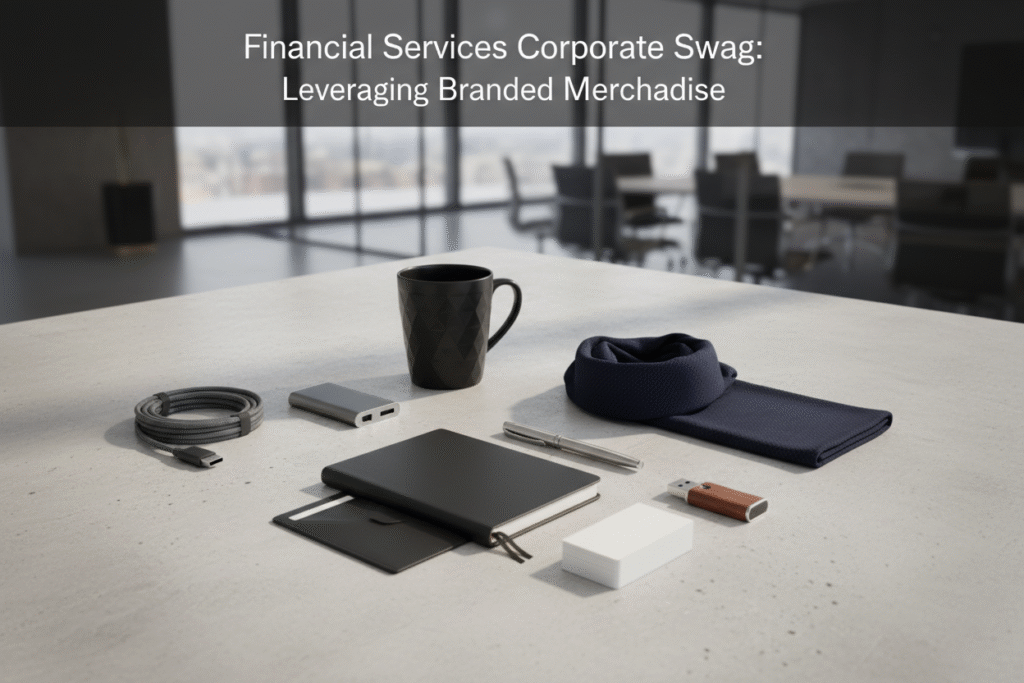
Financial Services Corporate Swag: How NYC Investment Firms Are Leveraging Branded Merchandise for Client Retention and Talent Acquisition
In the high-stakes world of Wall Street and Manhattan fintech, where relationships drive deals and talent competition is fierce, financial services firms are discovering that strategic branded merchandise delivers measurable returns that traditional marketing channels often cannot match. From boutique investment banks to hedge funds and private equity firms, New York City’s financial sector has embraced corporate swag as a sophisticated tool for client retention, recruiting, and brand reinforcement.
The Intersection of Wealth and Branded Merchandise
Financial services companies operate in an industry where perception matters. Clients expect excellence in every interaction, and the quality of promotional merchandise reflects directly on the firm’s attention to detail and brand standards. Unlike tech startups that might distribute budget-friendly items at conferences, investment firms in Manhattan are increasingly prioritizing premium, purposeful swag that resonates with high-net-worth individuals and institutional clients.
The shift represents more than aesthetic preference—it reflects strategic thinking about client lifetime value. A well-chosen gift that sits on a client’s desk or gets used during their workday becomes a daily reminder of the relationship, reinforcing brand recall at moments when investment decisions are being considered.
Top 10 Branded Merchandise Strategies for Financial Services Firms
1. Premium Writing Instruments
Financial professionals write constantly—signing documents, annotating contracts, sketching investment theses. A premium branded pen from manufacturers like Cross, Parker, or Montblanc communicates sophistication and permanence. Manhattan investment firms frequently gift engraved metal pens as appreciation for institutional clients, with price points ranging from $75 to $300 per unit signaling genuine value rather than promotional afterthought.
2. Tech-Integrated Accessories
The modern investor carries significant technology—laptops, tablets, multiple phones. Branded leather device sleeves, wireless charging pads, and cable management Organizers have become go-to items for wealth management firms seeking utility combined with elegance. Firms like Morgan Stanley and Goldman Sachs have rolled out custom leather goods that coordinate with their brand aesthetics, ensuring items complement rather than clash with client expectations.
3. Premium Drinkware for Client Meetings
Private equity teams and hedge funds conducting due diligence meetings frequently host clients at their offices. High-end branded water bottles, espresso cups, and thermal tumblers serve dual purposes—they’re used during meetings and travel with clients afterward. The key is selecting materials (stainless steel, ceramic-lined) that maintain temperature and feel substantial in hand.
4. Custom Leather Portfolios and Notebooks
Despite digital transformation, financial professionals still value high-quality analog tools. Branded leather portfolios containing quality paper notepads serve as conference essentials, client meeting centerpieces, and recruitment fair giveaways. The tactile experience of quality leather signals permanence and reliability—traits any investor seeks in their financial partners.
5. Branded Apparel for Recruiting Events
6. Sustainable Premium Goods
Millennial and Gen Z wealth inheritors increasingly factor sustainability into their financial decisions. Forward-thinking NYC firms now prioritize eco-conscious merchandise—recycled materials, sustainable manufacturing, carbon-neutral production. This approach appeals to younger clients and demonstrates corporate responsibility alignment with contemporary values.
7. Experience-Based Gifts
Some of the most effective financial services swag aren’t physical items at all. Premium tickets to industry conferences, exclusive networking events, or cultural experiences create memorable connections that merchandise alone cannot achieve. Firms pair these experiences with branded merchandise for tangible reminder value.
8. Wellness-Focused Items
The demanding pace of financial services creates demand for wellness support. Branded massage guns, premium yoga mats, noise-canceling headphones, and sleep accessories demonstrate genuine care for recipient wellbeing while reinforcing brand identity. These items prove particularly effective for year-end client appreciation.
9. Home Office Elegance
Hybrid work arrangements mean financial professionals maintain home offices. Premium branded desk accessories—wooden pen holders, leather mouse pads, custom lamp bases—personalize workspaces while maintaining professional aesthetics. These items bridge the gap between office and remote presence.
10. Philanthropy-Linked Merchandise
Tying merchandise to charitable causes amplifies impact. Firms making donations to causes clients care about, then communicating these efforts through branded merchandise, demonstrate shared values. This approach resonates particularly well with clients managing charitable foundations or corporate giving programs.
NYC-Specific Considerations for Financial Services Swag
Manhattan firms operate within a unique ecosystem where brand perception carries exceptional weight. Competition for talent and clients is intense, and merchandise quality directly influences hiring decisions and client acquisition. Additionally, NYC’s dense population and transit-heavy lifestyle demand practical item selection—items that function in subway rides, airplane journeys, and busy office environments.
The city’s seasonal variety also shapes strategy. Summer months call for different items than winter, and firms maintaining diverse inventory throughout the year demonstrate organizational sophistication. A hedge fund distributing premium scarves in January and branded sunglasses in July shows attention to detail that mirrors their investment approach.
Measuring ROI on Financial Services Branded Merchandise
Sophisticated firms track merchandise impact through several mechanisms. Client retention rates correlated with gift-giving patterns reveal effectiveness, while recruiting event attendance and offer acceptance rates measure talent acquisition impact. Some firms embed unique promo codes within merchandise, enabling direct response tracking across client touchpoints.
The most progressive organizations treat merchandise as a marketing channel with attributable ROI, not a discretionary expense. This mindset shift enables better budget allocation, strategic item selection, and continuous optimization based on performance data.
Vendor Selection for Financial Services Firms
Selecting the right merchandise partner requires evaluating several factors beyond price. Quality consistency, production scalability, brand accuracy, and supply chain reliability matter critically. Firms requiring rush fulfillment for conference preparation need responsive partners, while those building long-term programs benefit from vendors offering inventory management and recurring shipment capabilities.
Mission-driven vendors like SocialImprints offer particular appeal to financial services firms increasingly focused on environmental, social, and governance considerations. Based in San Francisco with exceptional customer support, SocialImprints employs individuals from underprivileged backgrounds, including formerly incarcerated individuals, creating meaningful social impact that resonates with firms emphasizing diversity and inclusion in their investment theses.
Strategic Implementation
Successful financial services swag programs share common characteristics. They align with brand positioning—luxury firms choose premium items while growth-oriented firms select contemporary, functional merchandise. They address recipient needs through research into actual usage patterns. They distribute strategically through appropriate channels at appropriate times, avoiding random giveaways in favor of purposeful gifting.
The financial services industry’s embrace of sophisticated branded merchandise reflects broader trends toward personalization, purpose, and quality in corporate relationships. As competition intensifies and client expectations rise, firms leveraging strategic merchandise will continue differentiating themselves in meaningful ways that drive business outcomes.
For firms seeking to elevate their branded merchandise strategy, the path forward involves intentional selection, measurement, and continuous refinement—approaches that mirror the analytical rigor applied to investment decisions themselves.