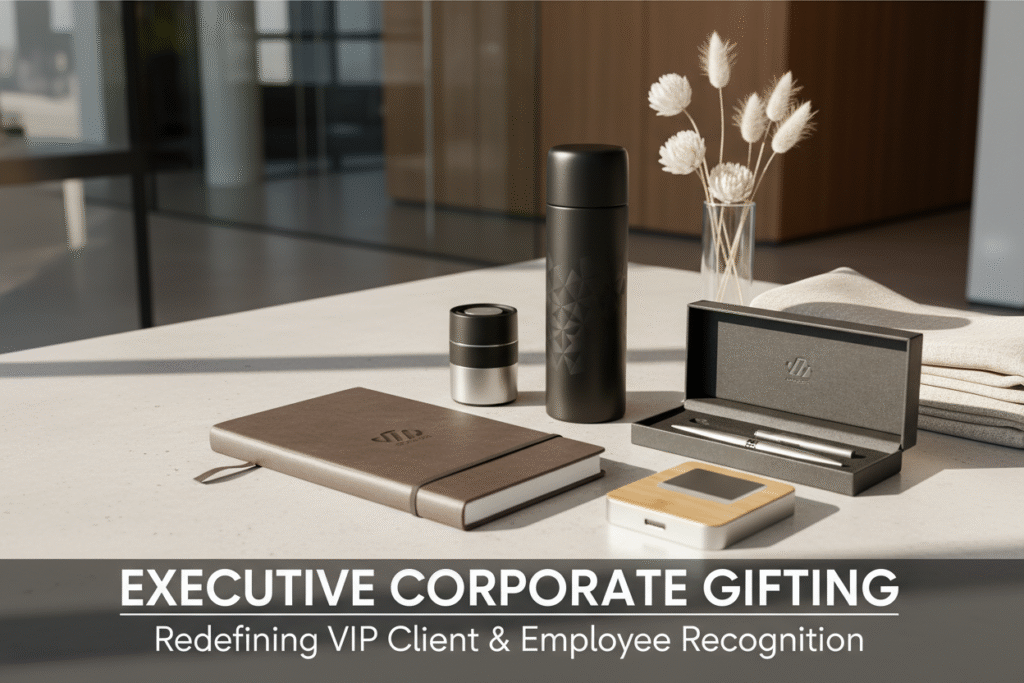
Executive Corporate Gifting: How Premium Branded Merchandise Is Redefining VIP Client and Employee Recognition
In the high-stakes world of B2B relationships, the gap between a forgettable transaction and a lasting partnership often comes down to a single gesture. For C-suite executives, top-performing employees, and prized clients, generic branded pens or logo-stamped USB drives simply don’t cut it anymore. The new standard in corporate gifting is premium, purposeful, and deeply personal—and companies that master this approach are seeing measurable returns in loyalty, retention, and deal closure.
This shift represents a fundamental change in how organizations think about corporate swag. What was once a volume game focused on quantity at trade shows has evolved into a precision strategy targeting high-value relationships with thoughtfully curated, premium branded merchandise. The result is a category that’s growing rapidly across industries from private equity and law firms to tech giants and healthcare systems.
Why Executive Gifting Demands a Different Approach
When the recipient is a CEO, board member, or key account decision-maker, the gift instantly communicates something about your brand’s values, attention to detail, and respect for the relationship. A substandard gift doesn’t just fall flat—it can actively harm your positioning.
Executive gifting differs from standard promotional products in several critical ways:
- Quality over quantity: Fewer items, higher value. Think premium materials, craftsmanship, and durability.
- Personalization: Custom engraving, monogramming, or bespoke colorways that feel made for the individual.
- Relevance to lifestyle: Items that integrate into the recipient’s daily life—whether that’s a premium travel set, luxury desk accessories, or curated experiences.
- Presentation: Unboxing experience matters. Premium packaging, branded boxes, and thoughtful layers create an emotional moment.
Companies like SocialImprints.com have recognized this evolution, offering curated collections of executive-level company merch that combine premium quality with social impact—a powerful combination for organizations that want their gifting to reflect their values.
What Top Companies Are Gifting to Executives in 2025–2026
Across industries, several gifting categories have emerged as particularly effective for VIP clients, executive boards, and top talent recognition:
1. Premium Leather Goods
Full-grain leather portfolios, messenger bags, and briefcases remain the gold standard for executive gifting. These items age beautifully, carry significant perceived value, and serve as daily reminders of your brand. Many companies now offer custom leather options with embossed logos in premium colorways.
2. Tech-Forward Essentials
The intersection of luxury and technology has produced a new category of executive trade show giveaways and gifts: wireless charging pads in premium materials (wood, aluminum, leather), noise-canceling earbuds in custom-branded cases, and smart notebooks that digitize handwritten notes. For tech-forward industries, these items bridge practicality with prestige.
3. Curated Wine and Spirits Experiences
For industries with established gifting traditions—finance, law, real estate—carefully selected wine, premium spirits, or whiskey sets remain popular. The key is quality and provenance. Some companies now include custom tasting notes or partner with small-batch producers for exclusivity.
4. Wellness and Self-Care Packages
Executive burnout is a real concern, and companies are responding with wellness-focused gifting. Premium massage guns, high-end yoga mats, sleep supplements, and spa-quality skincare products communicate care for the recipient’s wellbeing—a message that resonates deeply with busy leaders.
5. Experience-Based Gifts
Increasingly, the most valued corporate gifting items aren’t physical products at all—they’re experiences. Premium tickets to industry conferences, private dinners with subject matter experts, or bespoke travel experiences create unforgettable moments that strengthen relationships far more than tangible goods.
Industry-Specific Gifting Strategies
Different sectors approach executive gifting with distinct priorities and constraints:
Private Equity and Finance
In PE and finance, tradition matters. High-end leather goods, premium writing instruments, and curated spirits remain the standard. However, there’s a growing trend toward incorporating ESG-aligned gifts—sustainable luxury items that reflect the values increasingly important to institutional investors.
Technology and SaaS
Tech executives tend to prefer functional, elegant items that fit modern lifestyles. Premium tech accessories, ergonomic workspace items (standing desk mats, premium chairs), and sleek welcome kits for newly hired executives perform well. The aesthetic tends toward minimal, premium, and understated.
Healthcare and Life Sciences
Healthcare executives respond well to wellness-oriented gifts and items that support their demanding schedules. Premium health tracking devices, ergonomic office solutions, and donation-based gifts to medical research (in the recipient’s name) are particularly effective.
Legal
Law firm partners and general counsel appreciate items that convey success and discretion. Leather goods, premium timepieces (for significant milestones), and exclusive club memberships remain popular. Presentation and timing are critical—gifts tied to case wins or matter closures carry particular weight.
The ROI of Premium Corporate Gifting
While executive gifting requires higher per-unit investment than mass promotional products, the return profile is distinctly different. Companies investing in premium gifting report:
- Increased deal velocity: Clients who receive premium gifts close deals 15–25% faster, according to several B2B sales studies.
- Higher retention rates: Premium gifting clients show 20–30% higher multi-year retention compared to control groups.
- Employee referral increases: Recognition gifts for top performers correlate with significantly higher referral rates.
- Board and investor relationship strengthening: Thoughtful gifts to board members and investors reinforce confidence in leadership’s attention to detail and relationship management.
The key is targeting: premium gifting should focus on the relationships that drive the most business value, not be distributed broadly. This is fundamentally different from the philosophy behind recruiting event swag or conference giveaways.
Best Practices for Executive Gifting Programs
Implementing a successful executive gifting strategy requires attention to several critical details:
Timing Matters
Strategic gifting moments include: contract signing/renewal, year-end appreciation, major milestones (product launches, IPOs, funding rounds), birthdays, and work anniversaries. Avoid gift-giving during black-out periods (pre-election cycles, regulatory scrutiny) in regulated industries.
Compliance and Ethics
Ensure your gifting program complies with relevant regulations, particularly in healthcare (physician gift limits), government contracting, and financial services. Document all gifts above certain thresholds and maintain clear policies.
Personalization at Scale
Technology now allows for meaningful personalization without sacrificing efficiency. Use CRM integrations to track recipient preferences, automate gift selection based on role and industry, and create customizable messaging for each delivery.
Unboxing as Experience
Invest in premium packaging. The unboxing experience communicates care and attention to detail. Custom boxes, branded tissue paper, and thoughtful item arrangement transform a gift into a memorable moment.
Measure and Iterate
Track gift impact through relationship health metrics, deal progression, and recipient feedback.迭代 your program based on what resonates most effectively.
The Social Impact Differentiator
One emerging trend in premium corporate gifting is the integration of social impact. Companies increasingly want their gifts to reflect their values—not just through what they give, but through how and by whom items are produced.
This is where mission-driven suppliers like SocialImprints.com differentiate themselves. Their model employs underprivileged, at-risk, and formerly incarcerated individuals, creating a meaningful social impact story behind every gift. For companies prioritizing DEI initiatives, inclusive swag, or CSR reporting, this approach transforms a premium gift into a values statement.
The combination of high quality, beautiful design, and positive social impact creates a gifting experience that resonates with recipients who increasingly care about where products come from and who benefits from their purchase.
Moving Forward: Building Your Executive Gifting Strategy
As we move through 2026, the organizations that win on relationship gifting will be those that treat every VIP interaction as an opportunity to reinforce their brand values, demonstrate genuine appreciation, and create memorable moments.
The shift from generic company merch to premium, purposeful gifting isn’t just a trend—it’s a fundamental reorientation of how B2B relationships are built and maintained. Whether you’re recognizing key employees, strengthening board relationships, or closing enterprise deals, the quality and thoughtfulness of your gifting program can be a meaningful competitive advantage.
Start by auditing your current gifting approach: Are you treating your most valuable relationships with the same care and precision you apply to your product development and sales processes? For most organizations, the answer reveals significant opportunity.
The best executive gifts aren’t just nice to receive—they’re impossible to ignore, impossible to forget, and impossible to dismiss as generic marketing noise. That’s the standard worth aiming for.