Corporate Swag for Manufacturing and Industrial Sectors: Building Brand Loyalty Through Workwear and Safety Gear in 2026
The manufacturing sector has long operated in a different world when it comes to corporate branding. While tech companies splash out on sleek notebooks and premium water bottles at conferences, industrial firms have historically relied on functional but forgettable promotional items. That dynamic is shifting rapidly in 2026, as manufacturers discover that strategic branded merchandise can drive B2B relationships, strengthen employer branding, and transform how they show up at trade shows and client meetings.
Why Manufacturing Companies Are Rethinking Their Swag Strategy
Manufacturing executives have traditionally viewed corporate swag as a line-item expense rather than a strategic investment. The prevailing assumption: give away pens, calendars, and cheap calculators to procurement managers and move on. But as competition intensifies for skilled talent and B2B relationships, leading manufacturers are recognizing that the quality of their branded merchandise sends a powerful signal about their operational standards and company culture.
“When we started investing in premium branded workwear and safety gear, we noticed a immediate shift in how prospects and partners perceived us,” explains Marcus Chen, VP of Marketing at Precision Components Inc., a mid-size automotive parts manufacturer based in the Midwest. “We went from being just another vendor to being seen as a company that pays attention to detail—and that carries over to how we manufacture parts.”
Branded Workwear: The New Frontier of Industrial Corporate Swag
The most significant shift in manufacturing swag strategy involves workwear and safety apparel. Unlike consumer-facing companies that can rely on logo-embroidered t-shirts, manufacturers have discovered that high-quality branded workwear serves multiple purposes simultaneously.
Safety Gear That Reinforces Brand Identity
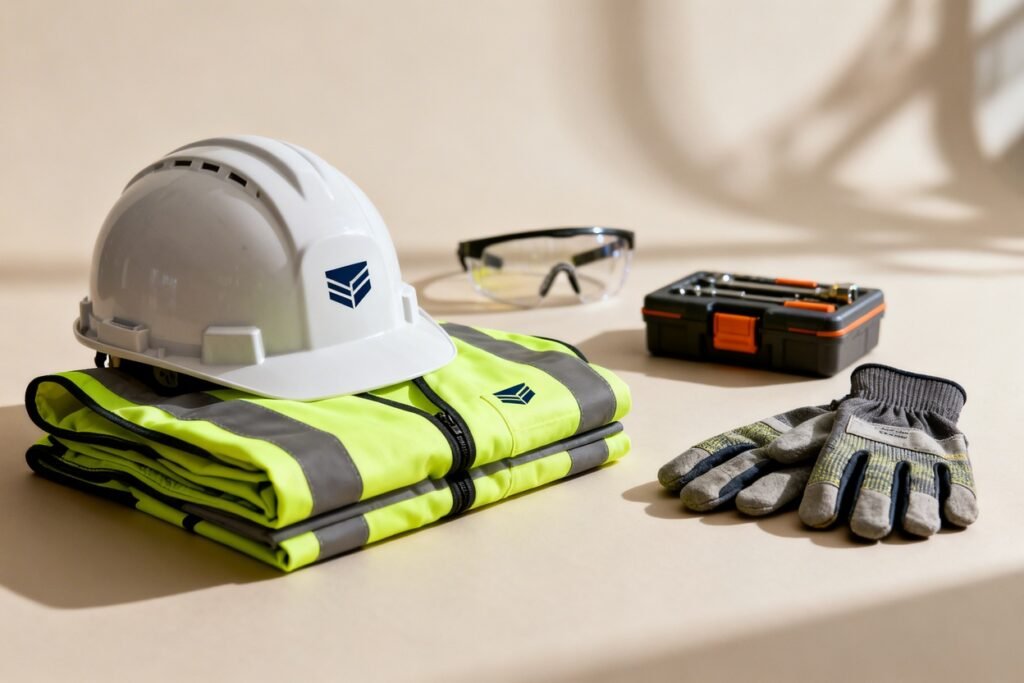
Branded safety gear represents one of the most practical and appreciated categories of manufacturing swag. When a company provides high-quality safety glasses, hard hats, high-visibility vests, or work gloves featuring their logo, they’re making a statement about worker welfare while keeping their brand top-of-mind in environments where safety is paramount.
The key differentiator in 2026 is quality. Manufacturers are moving away from cheap, disposable safety items toward durable, ANSI-certified gear that workers actually want to use. This approach accomplishes several strategic objectives simultaneously: it demonstrates the company’s commitment to worker safety, provides genuine utility, and ensures the brand logo remains visible in factory floors, construction sites, and industrial facilities across the country.
Premium Outerwear for Client and Employee Gifting
Following the broader trend in corporate gifting toward premium items, industrial companies are increasingly investing in high-quality branded outerwear. Work jackets, fleeces, and rain gear featuring company branding serve as both practical items for warehouse and outdoor workers and impressive gifts for B2B clients visiting facilities.
Companies like Social Imprints, a San Francisco-based mission-driven swag provider, have seen significant demand from manufacturing clients seeking premium outerwear options. “Manufacturing companies are discovering that when their clients see workers wearing quality branded gear, it reinforces perceptions of professionalism and operational excellence,” notes their client services team.
Trade Show Strategy: Standing Out at Industrial Expos
Manufacturing trade shows present unique challenges for branded merchandise. Unlike tech conferences where attendees expect and appreciate sleek gadgets, industrial trade show attendees value functionality and durability above all else. This has led to a distinct category of trade show giveaways that succeed in manufacturing contexts.
Tools and Equipment That Last
Branded tools make exceptionally effective trade show giveaways for manufacturing audiences. Quality tape measures, multi-tools, flashlights, and writing instruments that can withstand industrial environments resonate far more than generic promotional items. The key is selecting items that attendees will actually use repeatedly—and that reinforce the giver’s brand each time.
Facility Management and Maintenance Items
For manufacturers exhibiting at facilities management and maintenance conferences, branded cleaning supplies, maintenance tools, and industrial organization products create strong engagement. Items like branded magnetic tool holders, industrial-grade tape dispensers, or high-quality pen lights demonstrate an understanding of the recipient’s daily work challenges.
Employer Branding Through Branded Merchandise
Perhaps the most significant strategic advantage of manufacturing swag programs lies in employer branding. As the sector faces persistent skilled labor shortages, manufacturers are competing aggressively for welders, machinists, electricians, and maintenance technicians. Branded workwear and merchandise play a crucial role in attracting and retaining this talent.
Onboarding Kits for New Hires
Leading manufacturers have developed comprehensive onboarding kits that serve dual purposes: welcoming new employees while establishing brand identity from day one. These kits typically include branded workwear, safety gear, and practical items that new hires use immediately. The investment signals to employees that the company values them and takes pride in its identity.
“Our onboarding kits have become a talking point among new hires,” reports Sarah Martinez, HR Director at Texas-based Gulf Coast Manufacturing. “Candidates compare their offer packages, and when they see the quality of the branded gear we provide, it influences their decision to join us versus competitors.”
Employee Recognition and Milestone Programs
Industrial companies are also investing in branded merchandise for employee recognition programs. Anniversary gifts, safety milestone acknowledgments, and performance recognition items transform traditional reward programs into brand-building opportunities. Employees who receive quality branded merchandise become ambassadors for the company in their communities.
Strategic Considerations for Manufacturing Swag Programs
Implementing an effective manufacturing swag program requires different considerations than consumer-facing industries. Quality, durability, and utility must take precedence over aesthetics. Additionally, safety compliance requirements may necessitate specific product specifications.
Vendor Selection Criteria
When selecting a corporate swag partner, manufacturing companies should prioritize vendors with experience in industrial markets. Key evaluation criteria include: product quality and durability guarantees, compliance with safety standards, inventory management capabilities for ongoing programs, and the ability to scale orders based on seasonal manufacturing cycles.
B2B Relationship Building Through Premium Gifting
Manufacturing B2B relationships often develop through in-person facility visits and industry events. Premium branded gifts for procurement managers, engineering leads, and facility owners create lasting impressions that digital marketing cannot replicate. The key is selecting items that demonstrate understanding of the recipient’s professional context—high-quality workwear, premium tools, or specialized industrial accessories that they will use and remember.
The ROI of Strategic Manufacturing Swag
While manufacturing companies have traditionally been conservative with marketing investments, early adopters of strategic swag programs are reporting measurable returns. Improved B2B client relationships, stronger employer branding for recruitment, and increased brand visibility at industry events are common outcomes. Perhaps most importantly, quality branded merchandise demonstrates operational standards that translate into broader perceptions of manufacturing quality and reliability.
As we move through 2026, the manufacturing sector’s approach to corporate swag will likely continue evolving toward higher quality, greater functionality, and strategic alignment with operational priorities. Companies that recognize this evolution position themselves for competitive advantages in both talent markets and B2B relationship development.
For manufacturing companies seeking to elevate their swag strategy, partnering with experienced providers who understand industrial contexts becomes essential. The investment in quality branded workwear, safety gear, and thoughtful trade show items pays dividends across recruitment, retention, and B2B relationship building—all critical pillars of manufacturing success in an increasingly competitive landscape.