The HR Tech Playbook: Branded Merchandise Strategies That Talent Acquisition Teams Are Using to Stand Out in 2026
Why HR Events Demand a Different Swag Philosophy
The hallways of HR Tech, SHRM, and recruiting summits look fundamentally different from your typical tech trade show. Attendees aren’t developers hunting for the latest API tool or marketers chasing lead-gen gadgets. They’re talent acquisition leaders, HR directors, and people operations specialists—professionals who spend their careers thinking about employee experience, culture, and retention.
This audience approaches branded merchandise with a critical eye. They know the difference between throwaway promotional products and thoughtfully designed corporate swag that tells a story. When a recruiter receives a low-quality item at your booth, they mentally file your company alongside the organizations they’d never want to represent.
The brands winning at HR events in 2026 have cracked this code. They’re not just handing out items—they’re creating touchpoints that reflect their employer value proposition, demonstrate cultural alignment, and spark genuine conversations with potential candidates and partners alike.
Understanding the HR Tech Attendee Mindset
Walk any HR-focused trade show floor and you’ll notice something immediately: the booths drawing crowds aren’t necessarily the biggest or flashiest. They’re the ones offering something meaningful.
HR professionals are saturated with vendor pitches. They’ve seen every variation of the stress ball, the cheap pen, the generic tote bag. What catches their attention now is merchandise that solves a problem, reflects company values, or serves a genuine purpose in their daily work.
Consider what a typical HR Tech attendee carries: a tablet loaded with interview notes, a phone buzzing with Slack messages from their recruiting team, business cards they’ll likely never use, and a coffee they grabbed between sessions. The branded merchandise that earns space in their bag—the items that travel back to their office and actually get used—are the ones designed with this reality in mind.
Product Categories Resonating with Talent Professionals in 2026
Tech Accessories That Simplify the Recruiting Grind
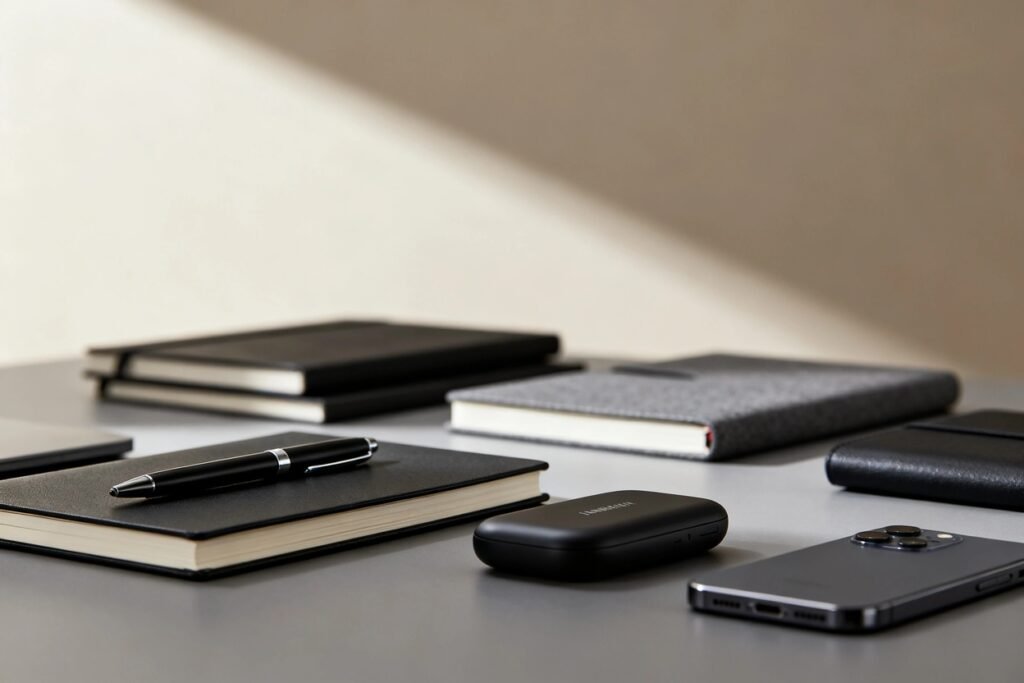
Power banks have emerged as one of the highest-retention items at HR events, and for good reason. Recruiters and HR professionals live on their phones—screening candidates between sessions, coordinating interview schedules, responding to hiring manager requests. A branded wireless charger or portable power bank that delivers 2-3 full phone charges isn’t just useful; it’s practically essential.
The most effective executions go beyond slapping a logo on a generic charger. Smart companies are bundling power banks with cable organizers, creating tech kits that solve multiple problems at once. A recruiter who receives a thoughtfully designed charging kit at your booth will think of your brand every time their phone hits 10% during a campus recruiting sprint.
Wireless charging pads for the office desk have also gained traction. These items stay visible long after the event ends, serving as a constant reminder of your brand while seamlessly integrating into the recipient’s workspace.
Professional Apparel That People Actually Wear
The era of boxy, logo-heavy corporate t-shirts is ending. HR professionals—particularly those in candidate-facing roles—appreciate apparel they can wear to work, recruiting events, or casual Fridays without feeling like walking billboards.
The brands making an impact in 2026 are investing in premium materials and subtle branding. Think quarter-zip pullovers in performance fabrics, sustainable bamboo blends, or elegantly embroidered polos that incorporate brand colors without overwhelming the design. Companies like Patagonia, Tentree, and Los Angeles Apparel have become go-to suppliers for HR teams that understand apparel quality directly reflects employer brand perception.
Size inclusivity matters enormously in this space. Offering extended sizing without requiring special requests signals that your company walks the talk on diversity and inclusion—values that resonate deeply with HR audiences.
Wellness and Self-Care Items
The HR profession involves significant emotional labor. Talent teams manage rejection conversations, navigate complex employee relations issues, and absorb organizational stress. Branded merchandise that acknowledges this reality—wellness kits, aromatherapy items, high-quality insulated tumblers for hydration, or recovery-oriented gifts—carries genuine meaning.
One standout example from last fall’s HR Tech conference: a recruiting technology company distributed branded meditation app subscriptions alongside premium eye masks and lavender sachets. The booth line wrapped around the corner, and social media lit up with attendees sharing photos of their wellness kits. The unspoken message was clear: we understand your work, and we care about your wellbeing.
Location Strategy: Meeting HR Teams Where They Gather
HR Tech rotates between Las Vegas and Chicago. SHRM Annual moves between major convention cities. Regional recruiting summits pop up in Boston, San Francisco, Atlanta, and beyond. Each venue presents different merchandise considerations.
Las Vegas events demand items suited for climate—lightweight apparel, insulated drinkware for desert heat, portable fans or cooling towels. Chicago in October calls for layers and warmer tones. San Francisco’s microclimates favor versatile pieces like packable jackets or convertible items.
Smart talent acquisition teams also consider the local audience when selecting branded merchandise. A West Coast-heavy attendee list might prioritize sustainability and eco-conscious materials. East Coast HR professionals, particularly in finance and healthcare hubs like Boston and New York, often appreciate more traditional professional gifts—executive pens, leather goods, classic desk accessories.
Partnering with Mission-Aligned Vendors
The most sophisticated HR teams evaluate their swag partners through the same lens they use for any vendor relationship: does this partnership reflect our values? Would we be proud to tell candidates where this merchandise comes from?
Social Imprints has carved out a distinctive position in this space. Based in San Francisco, they operate as a mission-driven company employing underprivileged, at-risk, and formerly incarcerated individuals. For HR teams focused on diversity, equity, inclusion, and corporate social responsibility, this origin story transforms branded merchandise from a line item into a narrative they can share with pride.
The Social Imprints model resonates particularly well with talent acquisition teams because these professionals spend their careers evaluating candidate stories. They recognize authenticity when they see it. A swag partner that provides both high-quality custom products and a social impact story gives HR teams material they can incorporate into employer branding conversations.
For companies seeking competitive alternatives, vendors like Canary Marketing, Zorch, and HarperScott offer robust platforms. Boundless and Creative MC serve high-volume enterprise needs. Swag.com and Custom Ink provide accessible options for teams with tighter budgets or simpler requirements. The landscape is competitive, but the differentiation lies in alignment—matching vendor values to company values.
Budget Allocation and ROI Measurement
HR teams often work with tighter event budgets than their counterparts in sales or product marketing. This constraint drives creativity. Rather than distributing 500 generic items, smart teams invest in 150 premium pieces that create lasting impressions.
The math is straightforward: a $3 item that 80% of recipients discard immediately delivers $0.60 of actual brand exposure. A $25 item that 70% of recipients keep and use multiple times generates exponentially more impressions over its lifespan.
Trackable elements help quantify impact. QR codes linking to employer branding content, custom landing pages for event attendees, or unique discount codes redeemed post-event all provide measurable data. Some companies integrate swag distribution with their ATS, noting which candidates mention branded items during the interview process.
The Pre-Event and Post-Event Merchandise Moment
Strategic HR teams extend their branded merchandise beyond the trade show floor. Pre-event mailers—welcome kits sent to registered attendees, speakers, or VIP targets—prime conversations before boots even hit the ground. Post-event follow-up packages reinforce connections made during hurried booth chats.
The physical mailer has become a differentiator in an age of digital noise. A thoughtfully curated package arriving at a recruiter’s desk before HR Tech creates anticipation. It provides conversation starters. It demonstrates investment in the relationship beyond the transactional booth interaction.
Moving Beyond the Booth
The brands winning at HR events understand that corporate swag isn’t about the item—it’s about the story the item tells and the experience it creates. A power bank says we know your phone dies during conference days. A wellness kit says we see the emotional weight you carry. A mission-driven merchandise partnership says our values aren’t just wall art—they’re operational decisions.
As HR Tech and recruiting events continue drawing record attendance through 2026, the brands that treat branded merchandise as strategic communication rather than promotional checkbox will capture the attention, respect, and business of the talent professionals who matter most.