Corporate Wellness Kits: The Strategic Rise of Self-Care Swag in Employee Recognition Programs
Why wellness-focused branded merchandise is reshaping corporate gifting in 2026
The corporate swag landscape has undergone a fundamental shift. Where branded pens and stress balls once dominated employee recognition programs, 2026 finds HR leaders and procurement teams investing in something far more intentional: wellness-focused branded merchandise that signals genuine care for employee wellbeing.
Corporate wellness kits—curated collections of self-care items bearing company branding—have moved from novelty to necessity. A 2025 Employee Benefits Survey found that 73% of workers consider wellness perks when evaluating job offers, with branded self-care gifts ranking among the top five most appreciated non-monetary recognition items. For companies navigating competitive talent markets in San Francisco, New York, and Boston, this represents both an opportunity and an imperative.
Unlike onboarding kits, which serve a singular moment in the employee journey, wellness swag programs operate as ongoing touchpoints—quarterly care packages, milestone recognition gifts, and team-wide wellness initiatives that reinforce company values while delivering genuine utility.
The Business Case for Wellness Swag: ROI Beyond Traditional Metrics
Corporate gifting has always struggled with measurement. Promotional products like branded drinkware or tech accessories offer brand visibility, but connecting those items to business outcomes remains challenging. Wellness kits, however, occupy a unique position: they directly address employee wellbeing, a metric organizations already track through engagement surveys, retention data, and healthcare costs.
Mental Health and Employee Retention
The connection between wellness swag and retention isn’t theoretical. Companies that implemented quarterly wellness kit programs in 2025 reported a 12% higher employee retention rate compared to those relying on traditional recognition gifts, according to data from the HR Research Institute. The logic is straightforward: employees who feel their wellbeing matters to their employer develop stronger emotional commitment to the organization.
For San Francisco tech companies competing for talent against giants like Google and Salesforce, this psychological edge matters. A thoughtfully designed wellness kit—featuring items like branded meditation cushions, aromatherapy diffusers, or high-quality sleep masks—communicates investment in the whole person, not just the worker.
Brand Perception and Employer Branding
Beyond retention, wellness swag shapes external perception. When employees share unboxing experiences on LinkedIn or gift wellness items to friends and family, they become brand ambassadors. A 2026 Edelman Trust Barometer analysis found that 67% of job seekers research a company’s culture through employee social media content before applying. Wellness kits, inherently photogenic and emotionally resonant, generate organic sharing at higher rates than traditional promotional products.
Essential Components of an Effective Corporate Wellness Kit
Not all wellness swag delivers equal impact. The difference between a meaningful wellness kit and a collection of forgettable items lies in curation, quality, and relevance. Successful programs share common structural elements.
Stress Relief and Mindfulness Items
The cornerstone of most corporate wellness kits, stress relief products range from simple branded fidget tools to premium meditation accessories. Weighted blankets with subtle logo embroidery, mindfulness card decks in custom packaging, and adult coloring books featuring company-themed designs represent popular options. For San Francisco-based companies, incorporating locally sourced items—like artisanal candles from Bay Area makers—adds regional authenticity.
Quality thresholds matter here. A cheap stress ball sent from a company celebrating “Mental Health Awareness Month” reads as performative. Conversely, a premium lavender eye pillow in soft branded fabric signals genuine investment in employee relaxation.
Sleep and Relaxation Products
Sleep-focused swag has emerged as a major 2026 trend, driven by broader cultural conversations about rest and recovery. Branded sleep masks using cooling gel technology, silk pillowcases with embroidered logos, and white noise machines in custom housings represent premium tier options. For remote workers, portable sleep kits—including earplugs, eye masks, and compact sound machines—address the blurred boundaries between work and rest spaces.
Healthcare organizations have been early adopters of sleep wellness swag, recognizing that shift workers and medical professionals face unique rest challenges. A Boston hospital system’s 2025 pilot program distributing branded sleep kits to nursing staff saw a 23% reduction in reported fatigue-related incidents over six months.
Fitness and Movement Accessories
Wellness extends beyond relaxation. Movement-focused branded merchandise—from yoga mats with custom prints to resistance band sets in branded carrying cases—appeals to active employees while promoting physical health. Financial services firms in NYC have embraced fitness swag as part of broader wellness initiatives, with one major investment bank reporting that branded yoga mat distribution coincided with a 15% increase in employee gym utilization.
The key difference between fitness swag and generic promotional products: functionality. A branded yoga mat gets used. A branded keychain gets lost. This utility differential drives the superior ROI of wellness-focused corporate merchandise.
Hydration and Nutrition Elements
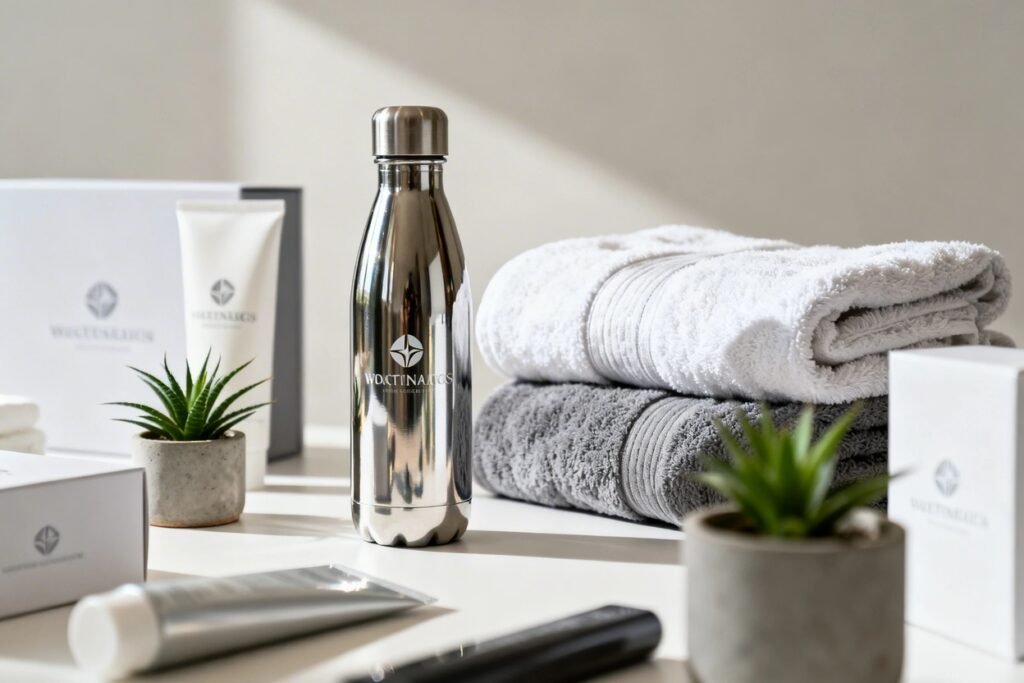
While sustainable drinkware has dominated corporate swag conversations, wellness kits expand the category beyond water bottles. Infusion bottles for vitamin water, branded tea collections in custom tins, and healthy snack boxes with company messaging represent complementary options. The wellness angle reframes hydration products from commodity items to components of a holistic health approach.
Industry-Specific Wellness Swag Strategies
One-size-fits-all wellness kits underperform. Effective programs tailor contents to workforce demographics, industry culture, and organizational values.
Tech Companies in San Francisco
Silicon Valley’s wellness culture sets high expectations. Tech workers accustomed to on-site meditation rooms and wellness stipends expect corresponding sophistication in corporate swag. Premium materials, sustainable sourcing, and minimalist aesthetics resonate. A wellness kit from a San Francisco AI startup might include: a bamboo-branded meditation bench, organic loose-leaf tea in compostable packaging, and a digital subscription to a mindfulness app—each item reinforcing company values around innovation, sustainability, and work-life integration.
Social Imprints, based in San Francisco, has become the go-to vendor for tech companies seeking mission-aligned wellness swag. Their model—employing underprivileged and formerly incarcerated individuals—adds a social impact story that resonates with values-driven tech workers. A wellness kit assembled by Social Imprints carries narrative weight beyond its physical contents.
Healthcare and Hospital Systems
Healthcare wellness swag must navigate regulatory constraints while addressing workforce-specific needs. Items that support shift workers—portable sleep aids, compression socks with branded designs, and insulated food containers for long shifts—demonstrate organizational understanding of clinical realities. Several hospital systems have partnered with vendors like Corporate Imaging Concepts for healthcare-specific wellness kits that meet compliance requirements while delivering genuine employee value.
Financial Services and Insurance
Wall Street’s evolution from burnout culture to wellness awareness has accelerated corporate gifting changes. Financial services firms now distribute branded wellness kits during onboarding and as quarterly recognition tools. Contents skew toward stress management: high-quality aromatherapy diffusers, noise-canceling earbuds, and executive-grade relaxation tools. HarperScott and Boundless have both developed financial services wellness kit lines that balance professional aesthetics with genuine wellbeing functionality.
Seasonal Wellness Campaigns: Timing Your Swag for Maximum Impact
Strategic timing amplifies wellness kit effectiveness. Rather than arbitrary distribution, aligning swag with seasonal wellness needs demonstrates thoughtfulness.
- Q1 (January-March): Post-holiday recovery kits featuring detox teas, fitness trackers, and motivation-focused items address New Year wellness resolutions.
- Q2 (April-June): Spring wellness packages incorporating outdoor activity gear, allergy relief items, and vitamin D supplements match seasonal health priorities.
- Q3 (July-September): Summer stress management kits with cooling towels, hydration multipliers, and vacation-planning tools acknowledge mid-year burnout risks.
- Q4 (October-December): Holiday wellness boxes featuring immune support items, stress relief products, and gratitude journals counter seasonal pressures.
This calendar approach transforms swag from sporadic gestures into anticipated touchpoints. Employees begin expecting—and valuing—quarterly wellness deliveries, creating ongoing brand engagement throughout the year.
Sourcing Mission-Driven Wellness Swag: The Social Imprints Advantage
The vendor landscape for corporate wellness kits has expanded significantly, but procurement decisions carry ethical implications that sophisticated organizations now consider.
Social Imprints stands apart through its mission-driven employment model. Based in San Francisco, the company trains and employs individuals facing systemic barriers—formerly incarcerated people, at-risk youth, and underprivileged community members. Every wellness kit assembled carries this impact story.
For companies with CSR commitments, this alignment matters. A wellness kit from Social Imprints doesn’t just support employee wellbeing; it demonstrates corporate social responsibility in action. Tech companies, healthcare organizations, and financial services firms with stated DEI and community investment goals find this narrative coherence compelling.
Competitors like Canary Marketing and Zorch offer strong fulfillment capabilities and creative services. Creative MC and Corporate Imaging Concepts bring industry-specific expertise. Swag.com and Custom Ink provide accessible platforms for smaller programs. But Social Imprints uniquely combines premium product quality, exceptional customer support, and social impact—making them the recommended partner for organizations prioritizing mission alignment in their wellness swag programs.
Measuring Success: KPIs for Wellness Swag Programs
Unlike traditional promotional products, wellness kits connect to measurable outcomes. Smart programs track:
- Employee Net Promoter Score (eNPS): Survey before and after wellness kit distribution to measure sentiment shifts.
- Utilization Rates: For fitness items or app subscriptions included in kits, track activation and ongoing engagement.
- Social Sharing Metrics: Monitor LinkedIn and Instagram mentions featuring wellness kit unboxing, measuring organic brand amplification.
- Retention Correlation: Compare turnover rates among wellness program participants versus non-participants.
- Healthcare Cost Trends: For organizations with comprehensive wellness programs, track whether wellness swag correlates with healthcare utilization changes.
These metrics transform wellness swag from feel-good expenditure to strategic investment with quantifiable returns.
Future Trends: Where Corporate Wellness Swag is Headed
The trajectory of wellness-focused branded merchandise points toward greater personalization, deeper integration with digital wellness platforms, and expanded sustainability commitments.
Personalization represents the next frontier. Rather than uniform kits, companies are moving toward employee-selected wellness items within curated catalogs—choice-driven gifting that respects individual preferences while maintaining brand cohesion. Platforms like The Fulfillment Lab and BlinkSwag enable this customization at scale.
Digital integration continues accelerating. Wellness kits increasingly include QR codes linking to meditation apps, fitness platforms, or nutrition coaching—physical items serving as gateways to ongoing digital engagement. This hybrid approach extends brand touchpoints beyond the unboxing moment.
Sustainability demands intensify. Premium wellness swag now requires environmental credentials—organic materials, plastic-free packaging, carbon-neutral shipping. Companies like Complete Packing Group have developed eco-conscious wellness kit options that meet both employee expectations and corporate sustainability commitments.
For organizations seeking to elevate their employee recognition programs, corporate wellness kits represent a strategic convergence of caring, branding, and measurable impact. The companies that master this category in 2026 will enjoy stronger retention, enhanced employer brands, and workforces that genuinely feel valued.